

BY JANET MANDELSTAM
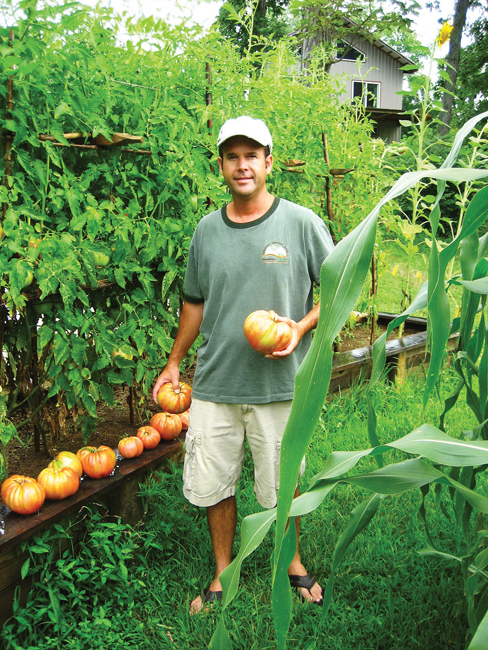
Ferrol Johnson wants local gardeners to think of the soil as “a pet or a friend.” At his Abundant Harvest Farms workshops, he teaches that soil is a living, breathing organism that, like pets and friends, must be nourished and nurtured.
Johnson launched Abundant Harvest Farms in 2009 to show urban gardeners how to become “stewards of the soil.” Using a three-step soil-enhancement process developed by his father and applying his own organic plant food, Johnson offers one-hour, $24.95, hands-on classes at Harmony School in a 100-square-foot garden. “Anyone,” he says, “can be an organic gardener.”
The first step is to swear off chemical fertilizers. “Conventional farming works against nature,” Johnson says. “The soil isn’t something on which you dump counterproductive stuff. Petroleum-based fertilizers are a quick fix for plants, but they don’t benefit the soil. Organic farming works with nature. If you put the right ingredients in the soil, the fertility will get better, and you’ll see the result in the plants.”
The plants in the Harmony garden over the summer were tomatoes and basil. This fall they include cabbage and root vegetables. All the harvested produce is donated to the school and to Mother Hubbard’s Cupboard for its food pantry.
The garden and workshops are a logical next step for Johnson. He grew up on “a few thousand acres” and spent several years simplifying his father’s approach to gardening. “I felt the best impact I could have was to work with urban gardeners, people with small spaces,” he says. So he sells his organic plant and garden food—available at Bloomingfoods and FARMbloomington—in 2.5-pound packages. That’s enough to cover a 100-square-foot garden, just the size of the organic garden at Harmony where students learn how to care for the soil, compost, and build raised beds. The workshops will continue at least until the end of the year.
And the payoff for soil stewardship? “When the soil is healthy,” Johnson says, “you will receive a more abundant harvest—and the food tastes better.”
To learn more about the workshops, contact Johnson at 277-8738 or abundantharvestfarms@yahoo.com.